Minecraft servers and modded gameplay often rely on additional tools to improve either world management or visual immersion. FastAsyncWorldEdit and Dynamic Lights serve very different purposes, but both can affect the way players, administrators, and server owners experience Minecraft.
FastAsyncWorldEdit focuses on large scale world editing, allowing users to perform complex building and terrain operations more efficiently. Dynamic Lights, on the other hand, focuses on lighting effects by allowing certain light sources to illuminate the surrounding environment while being carried or moved.
Because these tools solve different problems, comparing them is less about choosing a direct replacement and more about understanding their features, performance characteristics, compatibility, requirements, and practical use cases. This comparison examines FastAsyncWorldEdit vs Dynamic Lights objectively to clarify where each option fits within a Minecraft setup.
FastAsyncWorldEdit vs Dynamic Lights Comparison Table
| Feature | FastAsyncWorldEdit | Dynamic Lights |
| Primary purpose | Large scale world editing and building operations | Real time or moving light effects |
| Main users | Server administrators, builders, and developers | Players and users seeking improved visual immersion |
| Core functionality | Region editing, terrain modification, copying, pasting, and world manipulation | Light emission from held, dropped, or moving light sources depending on implementation |
| Performance focus | Optimizing and managing large WorldEdit operations | Rendering and calculating dynamic lighting effects |
| Typical environment | Primarily multiplayer servers and supported server platforms | Often client side or mod loader based environments, depending on the version |
| Resource usage | Can require significant CPU and memory during large operations | Can increase graphical and processing demands |
| World modification | Yes | Generally no direct world editing |
| Visual enhancement | Limited | Primary purpose |
| Administrative features | Extensive | Usually limited or not applicable |
| Best suited for | Construction, terrain work, maps, and large editing projects | Exploration, immersion, and improved lighting visuals |
FastAsyncWorldEdit Features and Functionality
FastAsyncWorldEdit, commonly known as FAWE, is designed as a high performance extension or alternative implementation associated with WorldEdit style functionality. Its main purpose is to help users perform large scale editing operations more efficiently than manually changing blocks one at a time.
Typical features include region selection, block replacement, copying and pasting structures, terrain editing, schematic support, and large scale world modification. These capabilities are especially useful for server administrators and builders who need to create or modify large areas.
One of the defining characteristics of FastAsyncWorldEdit is its focus on handling demanding editing tasks. Large operations can involve thousands or millions of blocks, and performing these changes efficiently is important for reducing delays and minimizing disruption on active servers.
Depending on the Minecraft version and platform, FastAsyncWorldEdit may also provide additional tools, configuration options, and integrations that improve the workflow for professional builders and server management teams.
Key FastAsyncWorldEdit Features
- Large scale block editing
- Region selection and manipulation
- Copy and paste functionality
- Schematic handling
- Terrain generation and modification tools
- Performance oriented processing for major editing tasks
- Administrative controls and configuration options
- Integration with supported Minecraft server platforms
Dynamic Lights Features and Functionality
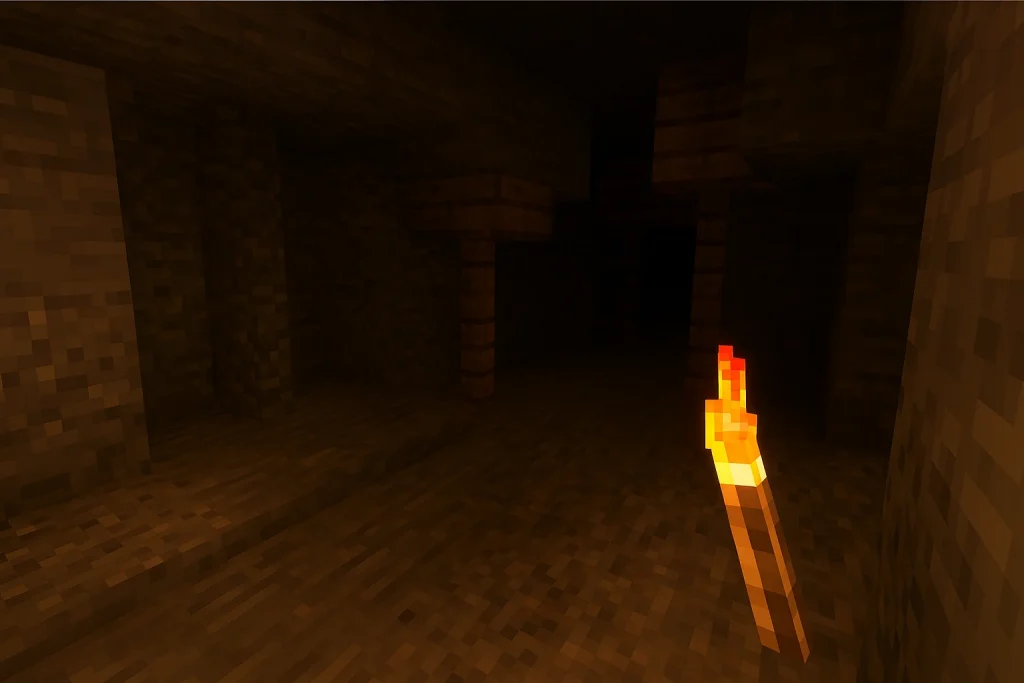
Dynamic Lights is a different type of Minecraft enhancement. Instead of editing the world, it focuses on how light behaves visually during gameplay. A Dynamic Lights implementation can allow objects such as torches, lantern related items, or other supported light sources to illuminate nearby areas while being carried or moved.
In standard Minecraft lighting behavior, a light source generally affects the world when it exists as a placed block. Dynamic lighting systems attempt to create the appearance of moving illumination without requiring the player to place a permanent light source.
This can improve visibility during exploration and create a more immersive visual experience. For example, a player carrying a torch may be surrounded by temporary illumination while walking through a dark cave.
Key Dynamic Lights Features
- Moving or temporary light effects
- Improved visual immersion
- Support for selected handheld light sources
- Potential illumination from dropped or moving entities
- Configurable lighting behavior in some implementations
- Enhanced exploration in dark environments
- Primarily visual rather than administrative functionality
Performance Differences Between FastAsyncWorldEdit and Dynamic Lights
Performance is an important difference between FastAsyncWorldEdit and Dynamic Lights because they place demands on Minecraft systems in different ways.
FastAsyncWorldEdit is designed around processing world changes efficiently. Large editing operations can still consume substantial server resources, especially when modifying extremely large regions. However, the purpose of FAWE is to provide better handling for demanding editing tasks and reduce the impact associated with inefficient block by block changes.
Dynamic Lights can affect performance through rendering and lighting calculations. The exact impact depends on the implementation, Minecraft version, graphics settings, number of active light sources, and the hardware being used. Systems with limited graphical resources may experience reduced frame rates when multiple dynamic lights are active.
Performance Factors to Consider
FastAsyncWorldEdit performance may depend on:
- Size of the selected region
- Number of blocks being changed
- Server hardware
- Available memory
- Configuration settings
- Number of simultaneous players and processes
- Complexity of terrain or editing operations
Dynamic Lights performance may depend on:
- Graphics hardware
- Number of active dynamic light sources
- Minecraft version
- Render distance
- Shader or visual mod usage
- Client side performance optimization settings
The two tools therefore affect performance in different environments. FastAsyncWorldEdit is more closely connected to world processing and server operations, while Dynamic Lights is generally more associated with client rendering and visual effects.
Compatibility and Platform Support
Compatibility is another major area where FastAsyncWorldEdit and Dynamic Lights differ.
FastAsyncWorldEdit is commonly used with supported Minecraft server software and WorldEdit related ecosystems. Compatibility can vary according to the Minecraft version, server platform, plugin API, and the specific release of FAWE being installed.
Dynamic Lights implementations can exist across different modding ecosystems. Some versions may be designed for particular mod loaders, while others may be included as part of broader optimization or visual modification packages. Compatibility can therefore depend heavily on the exact Dynamic Lights project being used.
Before installation, users should confirm:
- Supported Minecraft versions
- Required server or client platform
- Mod loader or plugin loader requirements
- Dependencies
- Compatibility with other mods or plugins
- Available updates and maintenance status
Because Dynamic Lights is a broad feature implemented by different projects, compatibility details may differ significantly between versions. FastAsyncWorldEdit compatibility can also change as Minecraft server platforms and WorldEdit ecosystems evolve.
System and Installation Requirements
FastAsyncWorldEdit generally requires a compatible Minecraft server environment and the appropriate version of the supporting plugin or dependency ecosystem. Server owners may also need sufficient memory and processing capacity when planning frequent large scale edits.
The installation process usually involves placing the appropriate plugin or supported build into the server environment and confirming compatibility with the existing server software. Configuration may be necessary to control memory usage, editing limits, permissions, and operational behavior.
Dynamic Lights requirements are usually more focused on the client or modded environment. Depending on the implementation, users may need a compatible mod loader and supporting libraries. The graphical capabilities of the computer can also influence how smoothly dynamic lighting effects perform.
Requirements Overview
| Requirement | FastAsyncWorldEdit | Dynamic Lights |
| Compatible Minecraft version | Required | Required |
| Server software | Usually required | Not always required |
| Plugin or mod loader | Depends on platform | Usually depends on implementation |
| Administrative permissions | Often needed | Usually not needed for basic use |
| Strong CPU for demanding tasks | Beneficial | Less directly relevant |
| Capable GPU | Less important | Can be important |
| Large memory allocation | Helpful for large edits | Depends on the overall mod setup |
Use Cases for FastAsyncWorldEdit
FastAsyncWorldEdit is primarily suited to projects involving extensive changes to a Minecraft world. Server administrators can use it when managing large maps, preparing spawn areas, building custom environments, or modifying terrain.
Professional and advanced builders may use it to duplicate structures, replace blocks across large areas, import or export supported structures, and accelerate repetitive construction tasks. It can also be useful for map development teams working collaboratively on large projects.
Common use cases include:
- Creating large server spawn areas
- Building adventure or survival maps
- Editing terrain
- Replacing large groups of blocks
- Copying and duplicating structures
- Managing construction projects
- Preparing event or minigame environments
- Performing controlled world modifications
Use Cases for Dynamic Lights
Dynamic Lights is primarily intended to improve the visual experience during normal gameplay. It can be useful for players exploring caves, traveling at night, or playing adventure focused modpacks.
Instead of providing administrative world editing tools, Dynamic Lights adds atmosphere and convenience through moving illumination effects. This makes it more relevant to individual gameplay experiences than server construction workflows.
Common use cases include:
- Cave exploration
- Nighttime travel
- Adventure maps
- Immersive modpacks
- Role playing environments
- Visual enhancement
- Gameplay recordings and screenshots
The value of Dynamic Lights is generally connected to appearance and atmosphere rather than world management.
FastAsyncWorldEdit Pros and Limitations
Pros
- Designed for large scale editing tasks
- Can improve efficiency when handling extensive world modifications
- Provides advanced building and administrative tools
- Useful for repetitive construction tasks
- Suitable for servers and collaborative projects
- Supports complex region and block operations
- Can reduce the time required for major map development work
Limitations
- Primarily intended for users who need world editing functionality
- Large operations can still place pressure on server resources
- Configuration and permissions may require technical knowledge
- Compatibility depends on supported Minecraft versions and server platforms
- Incorrect use of large editing commands can cause unintended world changes
FastAsyncWorldEdit is therefore focused on productivity and world manipulation rather than visual gameplay improvements.
Dynamic Lights Pros and Limitations
Pros
- Improves visual immersion
- Can make exploration more convenient
- Adds the appearance of moving illumination
- Useful for adventure and survival gameplay
- May reduce the need to place temporary light sources while exploring
- Can enhance screenshots and recorded gameplay
Limitations
- May reduce frame rates on lower performance systems
- Compatibility varies between implementations
- Usually provides little or no world management functionality
- Lighting effects may behave differently from permanent Minecraft light sources
- May conflict with some shaders, rendering systems, or other visual modifications
Dynamic Lights is therefore centered on visual enhancement and gameplay atmosphere rather than server administration or construction.
FastAsyncWorldEdit vs Dynamic Lights for Different Users
The differences between FastAsyncWorldEdit and Dynamic Lights become clearer when considering the needs of different users.
Server administrators may interact more directly with FastAsyncWorldEdit because it provides tools for managing and modifying the world. Its capabilities are particularly relevant when large areas need to be changed efficiently.
Builders and map creators may also find FastAsyncWorldEdit relevant because copying structures, editing terrain, and performing repeated block operations can significantly reduce manual work.
Players focused on visual immersion may be more interested in Dynamic Lights because its purpose is to make light sources appear more interactive during movement and exploration.
Modpack creators may evaluate Dynamic Lights based on compatibility, visual style, and performance. The choice of implementation can depend on the mod loader, Minecraft version, and other modifications included in the pack.
Key Differences Between FastAsyncWorldEdit and Dynamic Lights
Although both tools can improve a Minecraft experience, they operate in fundamentally different areas.
- FastAsyncWorldEdit focuses on modifying the Minecraft world.
- Dynamic Lights focuses on improving the visual behavior of illumination.
- FastAsyncWorldEdit is primarily useful for builders and administrators.
- Dynamic Lights is primarily useful for players seeking visual immersion.
- FastAsyncWorldEdit can place demands on server resources during large edits.
- Dynamic Lights can affect client performance and frame rates.
- FastAsyncWorldEdit provides extensive editing functionality.
- Dynamic Lights generally provides a narrower set of visual features.
They are not direct alternatives in the traditional sense because one can be used for world management while the other can enhance the visual experience of gameplay.
Conclusion
The comparison between FastAsyncWorldEdit vs Dynamic Lights highlights two Minecraft tools with very different purposes. FastAsyncWorldEdit is centered on efficient world editing, large scale construction, terrain modification, and administrative workflows. Dynamic Lights focuses on moving illumination effects and visual immersion during gameplay.
Their performance requirements, compatibility considerations, and use cases also differ. FastAsyncWorldEdit is more closely associated with server resources and large editing operations, while Dynamic Lights is generally more dependent on client rendering performance and the specific visual or modding environment.